How to Get Better at Jigsaw Puzzles
Most of getting faster at jigsaw puzzles comes down to searching less. The people who finish quickly are better organized, so the piece they pick up next has a good chance of fitting. These habits work on a 50-piece puzzle and on a 1000.
1. Build the edge first
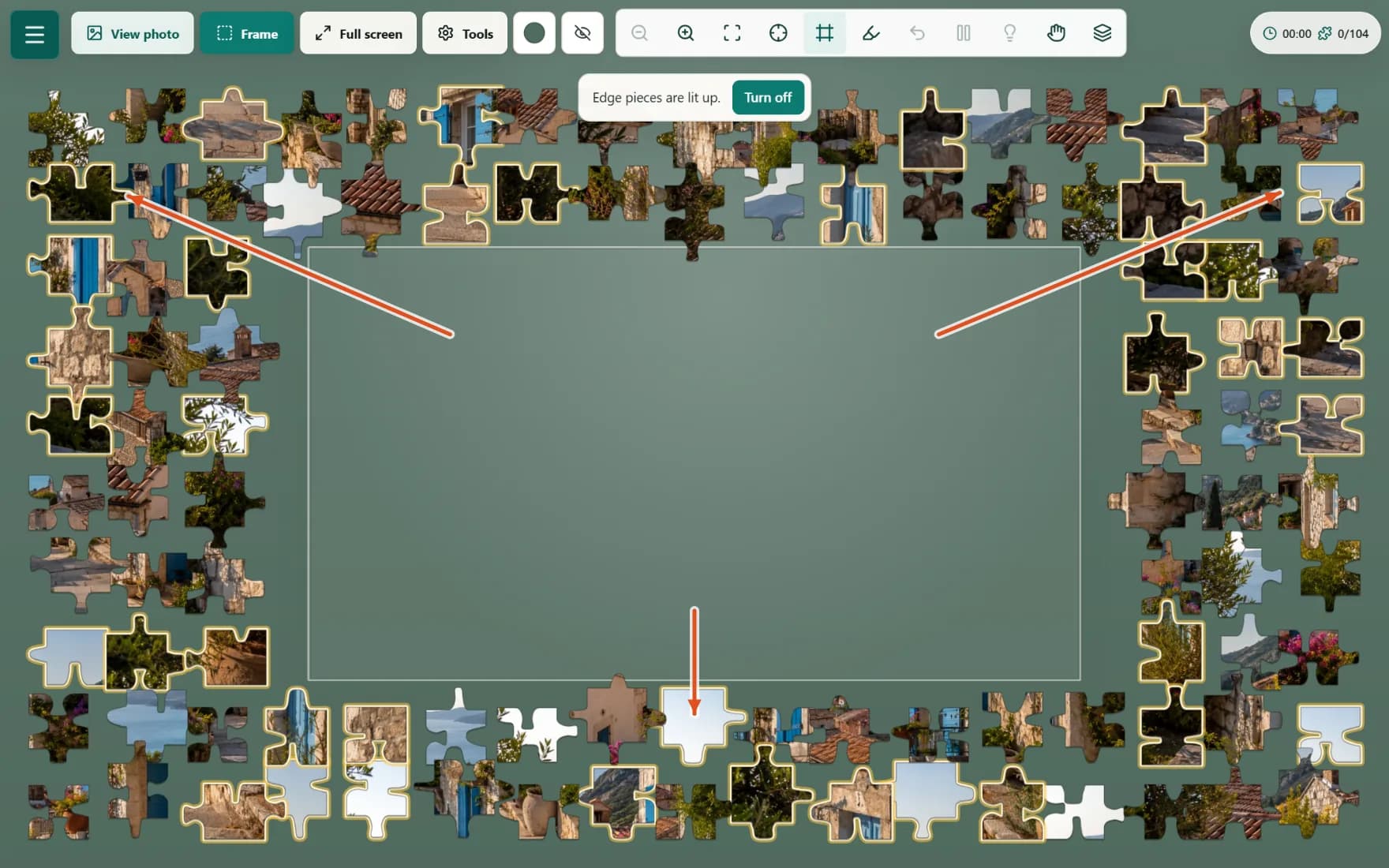
Find the four corners and the flat edge pieces, then put the frame together before anything else. It tells you how big the puzzle is and gives every color a wall to grow from. On Jigsaway, Light up edges makes the border pieces glow so you can pull them out in a few seconds instead of a few minutes.
2. Sort before you build
Split the loose pieces into small piles, first by strong color and then by texture when the colors are close. Sky, water, leaves, brick and fur all look different up close even when the color is the same. The time you spend sorting comes back many times over later. If you want a head start, Group by area moves the loose pieces toward the part of the puzzle they belong to, and Tidy into a grid lays them out in neat rows.
3. Do the easy parts while the pile is still big
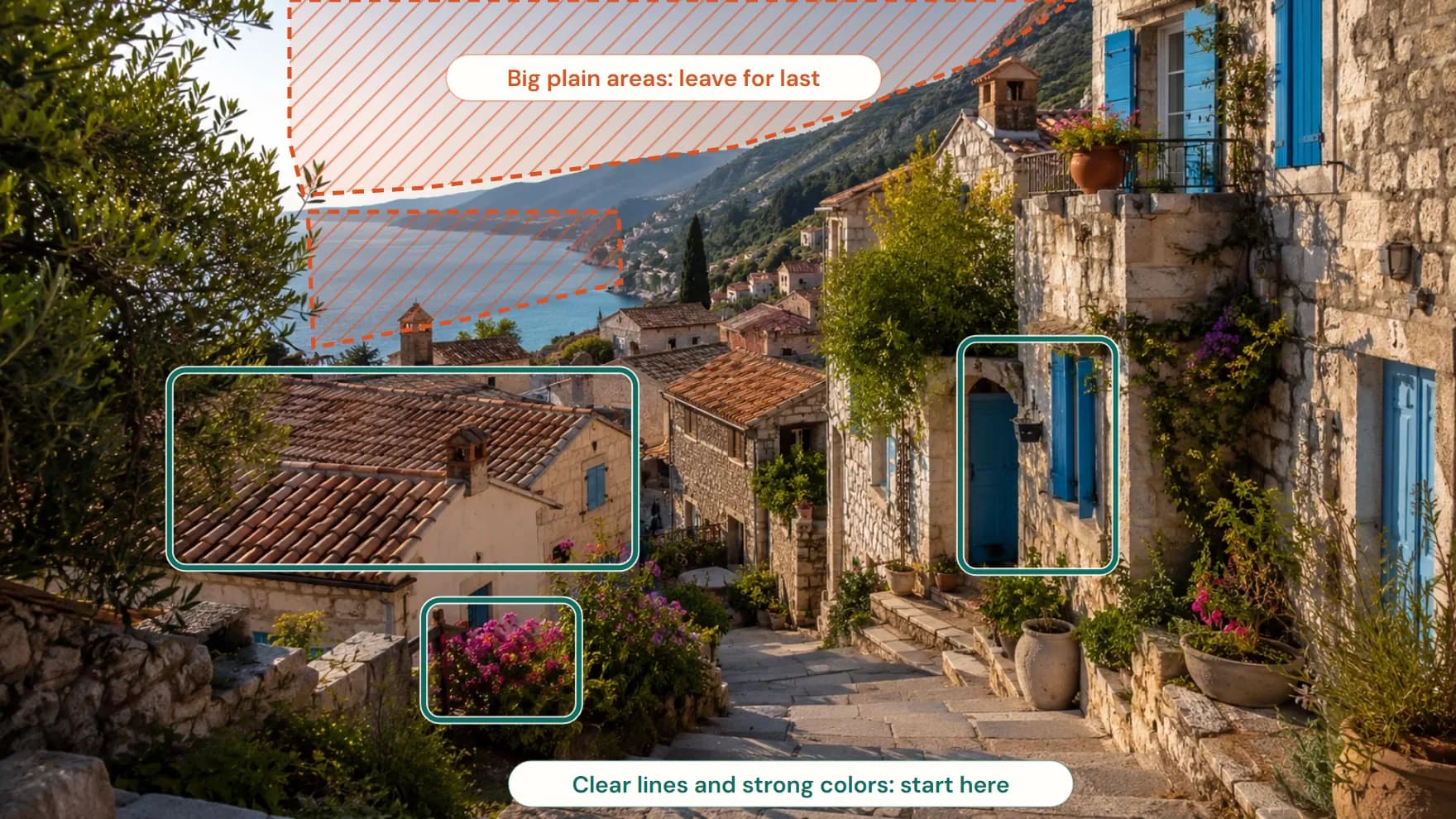
Start with whatever has clear lines and strong colors: a red door, a boat, a row of windows, the face of an animal. Leave the big plain areas like sky and snow for last. By the time you reach them, there are far fewer pieces left to try, and each one you place makes the next easier.
4. When the color runs out, use the shape
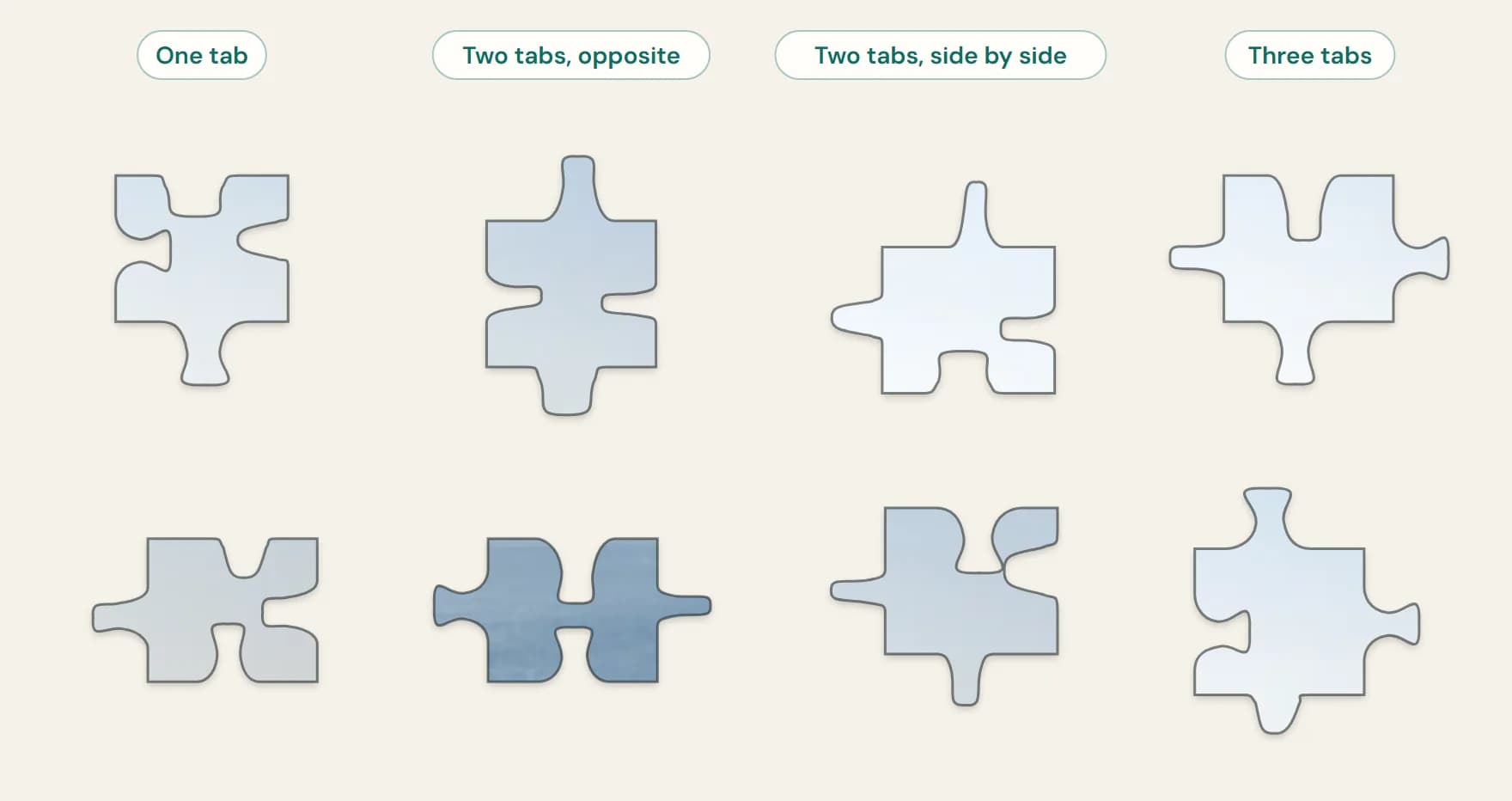
In a plain area, stop looking at the picture and look at the piece. Count its tabs and blanks and note where they sit. A gap that needs two tabs on opposite sides can only take a piece with that shape, so sort the plain pieces by shape and try only the ones that can fit. Our guide to interlocking jigsaw puzzles explains how the shapes are cut.
5. Look at the whole picture often
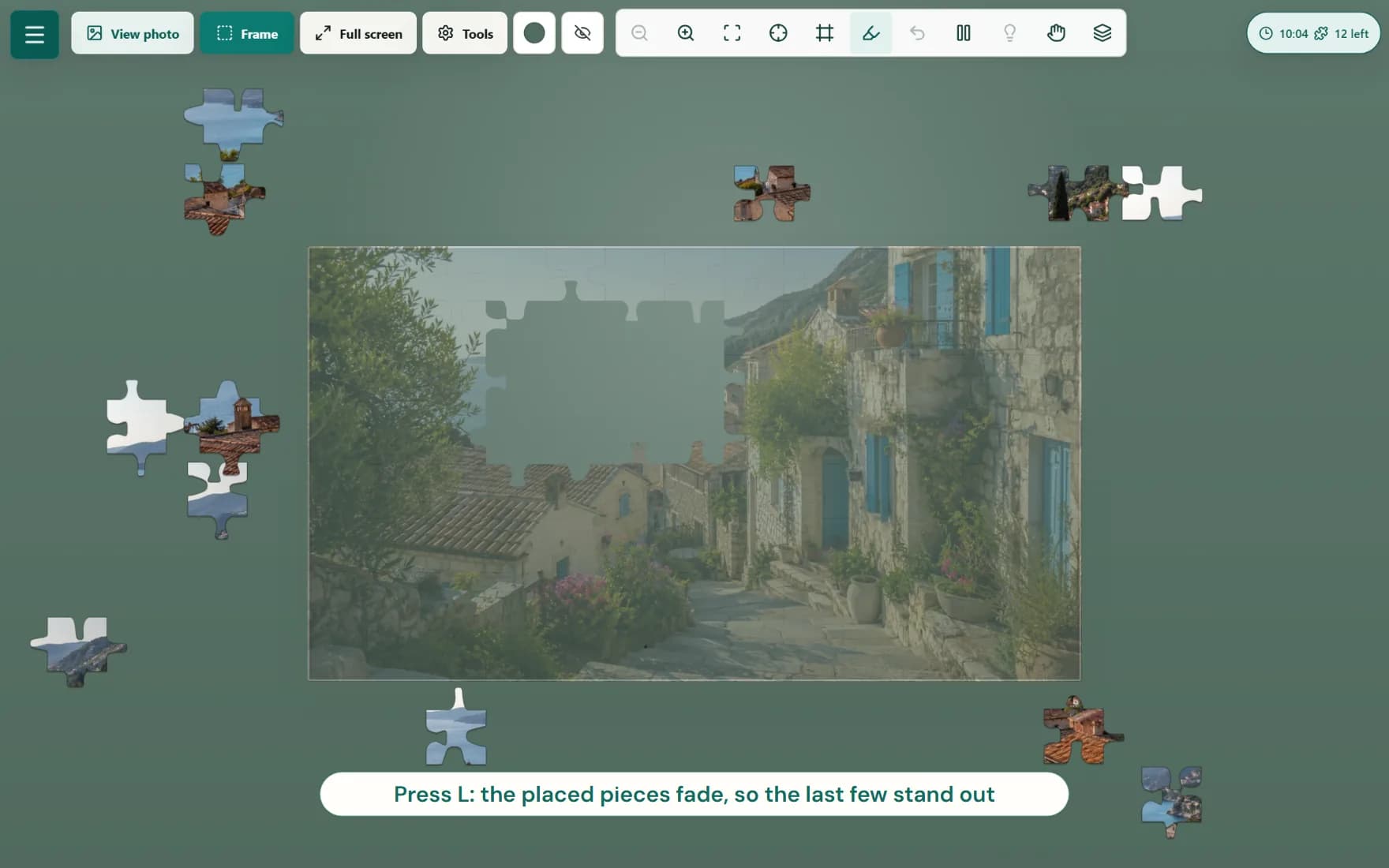
Check where a color sits in the finished picture before you hunt for it. A blue that looks like sky might be a window. View photo shows the full picture whenever you need it, and the ghost preview puts a faint copy on the board as a guide. When most pieces are in, press L to fade the placed ones so the last few stand out.
6. Raise the piece count slowly
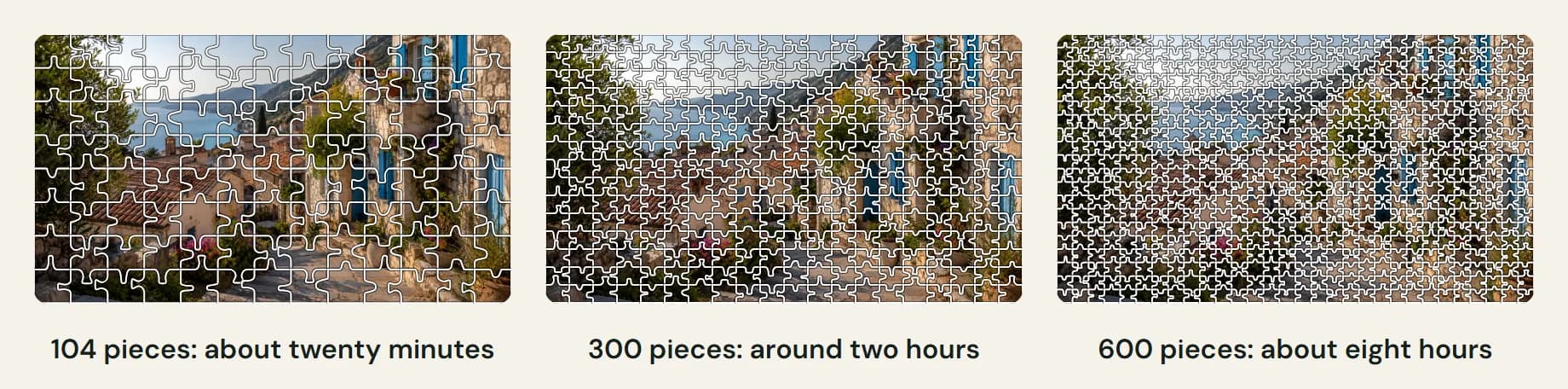
Start at 24 or 50 pieces, then step up when it feels easy. On Jigsaway, a 104-piece puzzle takes players about twenty minutes, 300 takes around two hours and 600 about eight. Playing a puzzle you already know at a higher piece count is a good way to learn, because the picture is familiar but the pieces are new. Our page on how long a 1000-piece puzzle takes has the real times at every piece count.
7. Take a break and come back
When you have stared at the same 20 pieces for ten minutes, walk away. Fresh eyes find a piece in seconds that tired ones missed. Solo progress saves in your browser as you go (unless you turn Save progress off in Game preferences), so you can close the puzzle and pick it up tomorrow.
8. Puzzle with someone else
Two people spot different things, and talking about a puzzle helps you see it. Start a multiplayer room and send the link. You will both build the same board from different screens.
A note for anyone chasing times: Hint, View photo and the other tools do not take a finish off the leaderboards. Only untimed games stay out of the rankings.