1000-Piece Jigsaw Puzzles to Play Online
Pick a picture you want to spend time with. Every puzzle below opens with 1000 pieces selected, ready to start free in your browser. There is no app to install and no account needed for solo play. A larger screen helps with the small pieces, and a saved board lets you leave some of the work for another day.
Four pictures, four ways into a large puzzle
The count is the same, but the work feels different. The workshop has straight tools and circular wheels. The reef offers small patches of distinct color. The alley asks you to compare shadows and reflections, while the flower beds repeat petal shapes across a much brighter scene. Choose the subject whose details you would enjoy looking at closely.
The Play links select 1000 on the setup page. Check that count before pressing New game, especially if you already have a saved game at another size. Continuing an older board keeps that board's original count.

Vintage Motorcycle Workshop
The motorcycle divides naturally into wheels, engine and bodywork. Each is large enough to build as a separate group. Keep the spanners from the wall apart from the wheel spokes, then look for the warmer reflections that distinguish metal near the window from metal under the saddle.
Play Vintage Motorcycle Workshop at 1000 pieces
Seahorses in a Coral Garden
Gold, pink, purple and green give you an early sort, but color alone will not finish the reef. Follow the seahorses' spotted ridges and the direction of the seagrass. The yellow fish have stripes that cross their bodies at different angles, useful clues once the larger outlines are in place.
Play Seahorses in a Coral Garden at 1000 pieces
Tokyo Lantern Alley at Night
Build a lantern or doorway first, then follow the edges of the shopfront around it. Paving lines narrow towards the far end of the street. Compare those angles rather than treating every blue reflection as one pile. The bikes are small, detailed groups worth setting aside until their surroundings become clearer.
Play Tokyo Lantern Alley at Night at 1000 pieces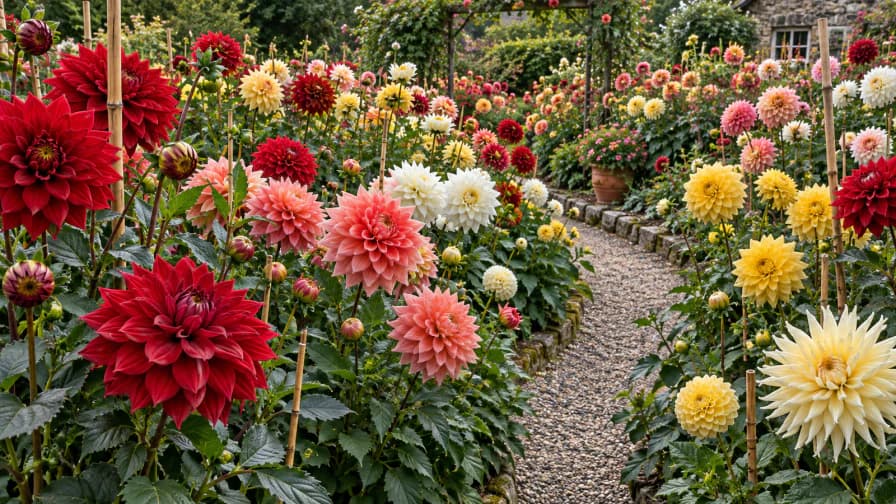
Dahlia Garden in Full Bloom
A single dahlia may fill several pieces, so match the direction of its petals as well as their color. Bamboo supports and the gravel path connect the flower groups. The leaves are less immediately distinctive, but stems, buds and small gaps between plants stop the green areas from becoming one undivided mass.
Play Dahlia Garden in Full Bloom at 1000 piecesSet up space before the groups grow
Open Full Screen once the game starts. Leave the center for the main picture and a few separate areas for loose pieces. You do not need a pile for every color. On the workshop image, a useful first division is green paint, wheels, brick and bench. On the reef, separate the animals from coral and open water.
Zoom in to inspect a small mark, then use Fit View when you need to see the table again. View Photo helps with relationships that a single fragment cannot show, such as which wheel sits below the red drawers. The full-screen guide explains the difference between more working space and a closer view.
Make small joins before chasing a whole section
A pair of matching pieces is useful even when you cannot place it yet. Join a spoke to its rim, or a flower petal to its stem, and keep that group nearby. Connected groups move together. Once another section reveals where they belong, you can bring them over without repeating the earlier work.
When two fragments look almost identical, compare the thickness and direction of the marks. A lantern rib bends around a curve. A paving joint runs towards the end of the alley. The difference is often more reliable than whether both pieces happen to look orange.
How long will 1000 pieces take?
There is no finish time that fits every player. Familiarity with the picture, interruptions and the amount of repeated detail all matter. Plan for a longer project than the same image at 300 pieces. You can stop after finishing one recognizable object rather than waiting for a particular time on the clock.
Solo progress saves locally when browser storage is available. Return in the same browser on the same device to continue it. Clearing site data can remove a local save, and private browsing is a poor place to keep a puzzle between sessions. Check that your game appears under Continue before closing a long session.
Can I play without watching the timer?
Yes. In a solo game, open Tools, choose Game settings and enable Untimed. That game becomes unranked, and you cannot turn it back into a timed attempt. The setting is for solo play, so it does not change a shared room's timer. Use it if you would rather concentrate on the picture than compare finish times.
Is a phone practical for this count?
You can open these puzzles on a phone, but 1000 pieces means more zooming and panning on a small display. A laptop, desktop or landscape tablet provides more room to compare pieces side by side. If handling the board becomes the difficult part, the 300-piece collection gives the same pictures and controls more breathing room.
If you care more about difficult imagery than an exact count, try Hard puzzles. Repeated patterns and muted colors can be demanding at smaller sizes too. For a different subject at 1000, browse the full catalog and choose the count on a puzzle's setup page.